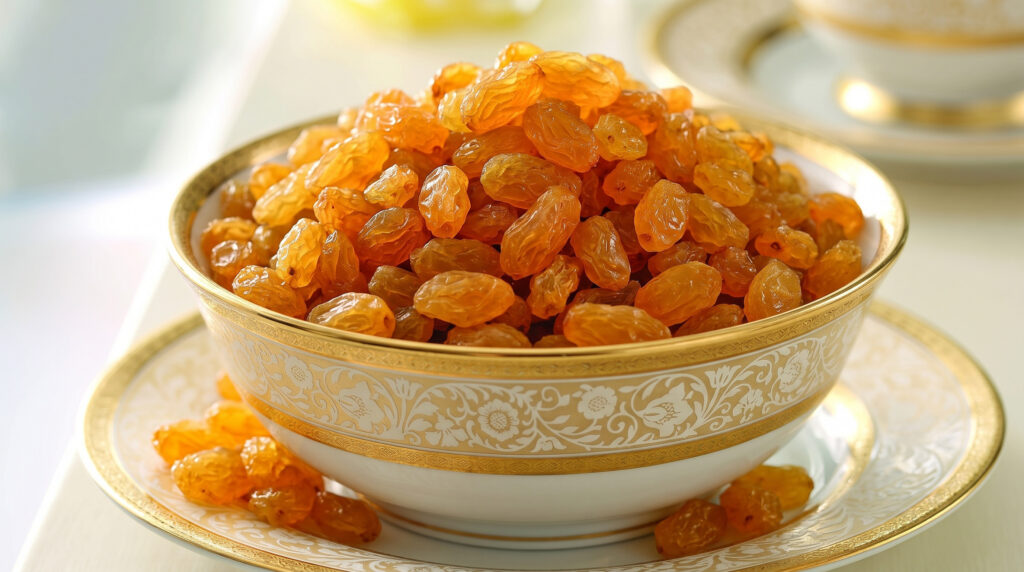
Iranian golden raisins are among the recognized products of the Iranian dried fruit industry due to their attractive golden color, natural sweet taste, and soft texture. This product is made from seedless grapes and holds an important position in the wholesale and export dried fruit markets. Among the producing regions of Iranian golden raisins, Malekan in East Azerbaijan province is of special importance due to its history of cultivating Keshmeshi (Kishmishi) grapes and the development of activities related to the processing, sorting, and packaging of raisins. At Melkania, the focus is placed on selecting suitable raw materials and monitoring product quality across the various processing and preparation stages. In this article, we explore the grape variety used, its main cultivation regions in Iran, the characteristics of golden raisins, and the main production stages of this product.
1. What are Iranian Golden Raisins? Golden raisins are a type of raisin obtained from the processing and drying of grapes, with colors ranging from light golden to amber. This product has a sweet taste and a soft texture. Unlike dark raisins, which are usually produced by natural sun-drying, golden raisins undergo specific processes aimed at accelerating the drying of the grapes and preserving the product’s light color. Iranian golden raisins are primarily made from seedless grapes. Their final quality depends on factors such as the grape variety, ripeness at harvest, drying conditions, processing method, and quality control.
2. Keshmeshi (Kishmishi) Grapes and Their Main Cultivation Regions in Iran An important feature of Iranian golden raisins is the use of a local grape variety called “Keshmeshi” (Kishmishi). This grape is widely used in the production of Iranian golden raisins, and the specimens used for this product are seedless. Compared to some other varieties, Keshmeshi grape berries generally have a smaller size and a rounder shape. Its characteristics also include a higher natural sweetness and a fleshy texture. These properties are significant in the process of converting grapes into raisins; under proper processing conditions, this grape usually experiences less weight loss compared to some other varieties, resulting in a product with a relatively fleshy texture.
Main Cultivation Regions of Keshmeshi Grapes in Iran Iran has numerous regions cultivating Keshmeshi grapes, a significant portion of which are located in the west and northwest of the country. The recognized hubs for cultivating this type of grape include:
-
Malekan and Bonab in East Azerbaijan Province.
-
Urmia in West Azerbaijan Province.
-
Takestan in Qazvin Province.
-
Malayer in Hamadan Province. Of course, this type of grape is also cultivated in some eastern regions, the most important of which is Quchan in Razavi Khorasan Province. Among these regions, Malekan and Bonab hold a special place in this product’s supply chain due to their favorable climatic conditions for growing Keshmeshi grapes, as well as the development of conversion industries, sorting, packaging, and the golden raisin trade. These two regions are considered among the most important centers for the production and export of Iranian golden raisins.
3. How are Iranian Golden Raisins Produced? The production method for golden raisins and the drying technique can vary among producers. The processing type, drying conditions, and the level of supervision over production stages are factors that influence the color, texture, and quality of the final product.
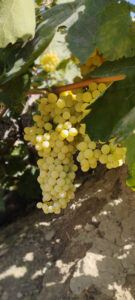
3.1. Harvesting and Transfer After the grapes ripen, the bunches are harvested at the appropriate time and transferred to processing workshops. At the processing site, the grapes are inspected, and initial sorting is performed to prepare the raw materials for the subsequent stages. The degree of ripeness, the health of the grapes, and their storage conditions prior to processing are influential factors in the final raisin’s quality.
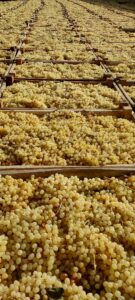
3.2. Preparation with Alkaline Solution and Drying In the standard method of producing golden raisins, the grapes are immersed in an alkaline solution containing water, potassium carbonate, and a special grape-processing oil to accelerate the drying process. This operation increases the permeability of the grape skin and facilitates the release of moisture from the berries. Under normal conditions, drying grapes and turning them into raisins might take about four to five weeks; however, using this preparation method can reduce the drying time to about eight to fourteen days. Reducing the drying time also helps preserve the product’s light color.
3.3. Sulfur Processing and Preserving the Golden Color One of the crucial stages in producing golden raisins is the controlled processing of grapes with sulfur smoke or sulfur dioxide in special chambers. This process plays two important roles in the quality of golden raisins:
-
Color Preservation: Helps stabilize the golden color and prevents the raisins from excessively darkening during processing and storage.
-
Increasing Shelf Life: Helps control the growth of molds, certain bacteria, and other spoilage microorganisms, thereby increasing the product’s stability during storage. The consumption rate, processing duration, and uniform distribution of sulfur smoke are critical factors at this stage. Proper control of these conditions ensures that the final product aligns with the desired technical specifications in terms of color, quality, and residue levels.
3.4. Washing and Final Preparation Upon completion of the drying and processing stages, the raisins enter the washing and final preparation phase. The goal of this stage is to clean the product’s surface, reduce processing residues, and remove dust and surface contaminants. After washing and preparation, the raisins are ready for final sorting, grading, and packaging.
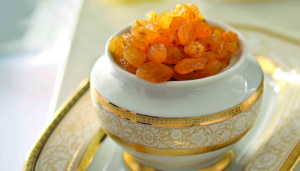
4. Characteristics of High-Quality Iranian Golden Raisins The quality of golden raisins is evaluated based on a set of visual, sensory, and technical attributes. The most important characteristics of this product include:
-
Color: A light golden to amber appearance with suitable color uniformity.
-
Taste: A natural sweet flavor derived from the sugars present in the grapes.
-
Texture: A soft and fleshy texture that makes the product suitable for various food applications.
-
Berry Appearance: Relatively uniform size and shape proportional to the product’s commercial grade.
-
Moisture: Controlling the moisture level is crucial for maintaining quality, product stability, and proper storage during transit.
-
Cleanliness: The final product must be well-sorted and acceptably free of foreign matter and undesirable defects. Together, these characteristics contribute to the commercial value and suitability of golden raisins for international markets.
5. Melkania Golden Raisins; Quality Selection and Grading At Melkania, golden raisins are classified into three grades—A, AA, and AAA—based on commercial features. The main difference between these grades relates to berry size and color uniformity, while the taste and core characteristics of the product remain identical across all three grades.
Commercial Grades of Melkania Golden Raisins
-
Grade A: A product with a standard commercial grade, suitable for buyers seeking the typical specifications of golden raisins.
-
Grade AA: A product with greater uniformity in berry size and color.
-
Grade AAA: The highest commercial grade, offering the best uniformity in terms of berry size and color. This grading allows international buyers to choose their desired product based on market needs, packaging type, and target customer groups.
6. Quality Control and Product Standards In the international food trade, aligning the product with the technical specifications and standards required by the buyer is fundamentally important. At Melkania, before finalizing an order, the customer’s desired technical specifications and quality requirements are received and reviewed. After verifying supply feasibility, the product is selected and prepared according to the agreed-upon specifications. The most important parameters considered in quality control include:
-
Quality and health of raw materials.
-
Color and visual uniformity.
-
Berry size and product grading.
-
Moisture levels.
-
Cleanliness and visual quality.
-
Chemical specifications and required test results. Laboratory tests of the product, including checking processing residue levels, are conducted based on agreed requirements, and a certificate of the test results is available for the customer. Melkania’s goal is to supply a product tailored to the technical specifications, quality requirements, and destination market standards desired by the buyer.
7. Packaging Options for Bulk Buyers Depending on the buyer’s needs and the destination market, Iranian golden raisins are offered in various packaging formats. Melkania provides the following export packaging options:
-
5 kg cartons.
-
10 kg cartons. Packaging details and order conditions can be reviewed and agreed upon according to the buyer’s needs.
8. Applications of Iranian Golden Raisins in International Markets Iranian golden raisins are suitable for diverse commercial applications, including:
-
Wholesale distribution of dried fruits.
-
Supplying raw materials to the food industry.
-
Produering bakery and confectionery items.
-
Packaging and repackaging food products.
-
Distribution in the retail market. For importers and distributors, choosing the right supplier requires evaluating factors such as product quality consistency, processing methods, lab results, packaging quality, and supply conditions. By focusing on these factors, Melkania operates to fulfill the needs of international buyers of Iranian golden raisins in wholesale and export markets.
Conclusion: Iranian Golden Raisins with Melkania Iranian golden raisins are the result of combining the features of select Keshmeshi (Kishmishi) grapes with specialized drying and processing methods. The golden color, natural sweet taste, soft texture, and diverse commercial grading have made this product an ideal option for international dried fruit buyers. Relying on its experience in raisin production and processing in the Malekan region of East Azerbaijan, Melkania focuses on selecting suitable raw materials, monitoring processing stages, and supplying a product that matches the specifications agreed upon with the customer.
Looking for an Iranian Golden Raisin Supplier? Contact Melkania to receive product specifications, available quality grades, export packaging options, pricing, and sample requests. Melkania; Supplying Iranian golden raisins for international markets.